QUICK ANSWER: A kitchen extension in St John's Wood typically costs £90,000–£220,000 for a rear extension, depending on size and specification. Unlike many London terraces where a side return is the default choice, side and roof extensions aren't permitted development anywhere in the St John's Wood Conservation Area — the gaps between the area's villa-style properties are specifically protected as part of the streetscape. A rear extension, while still usually requiring planning permission, is the more realistic route for most properties here.
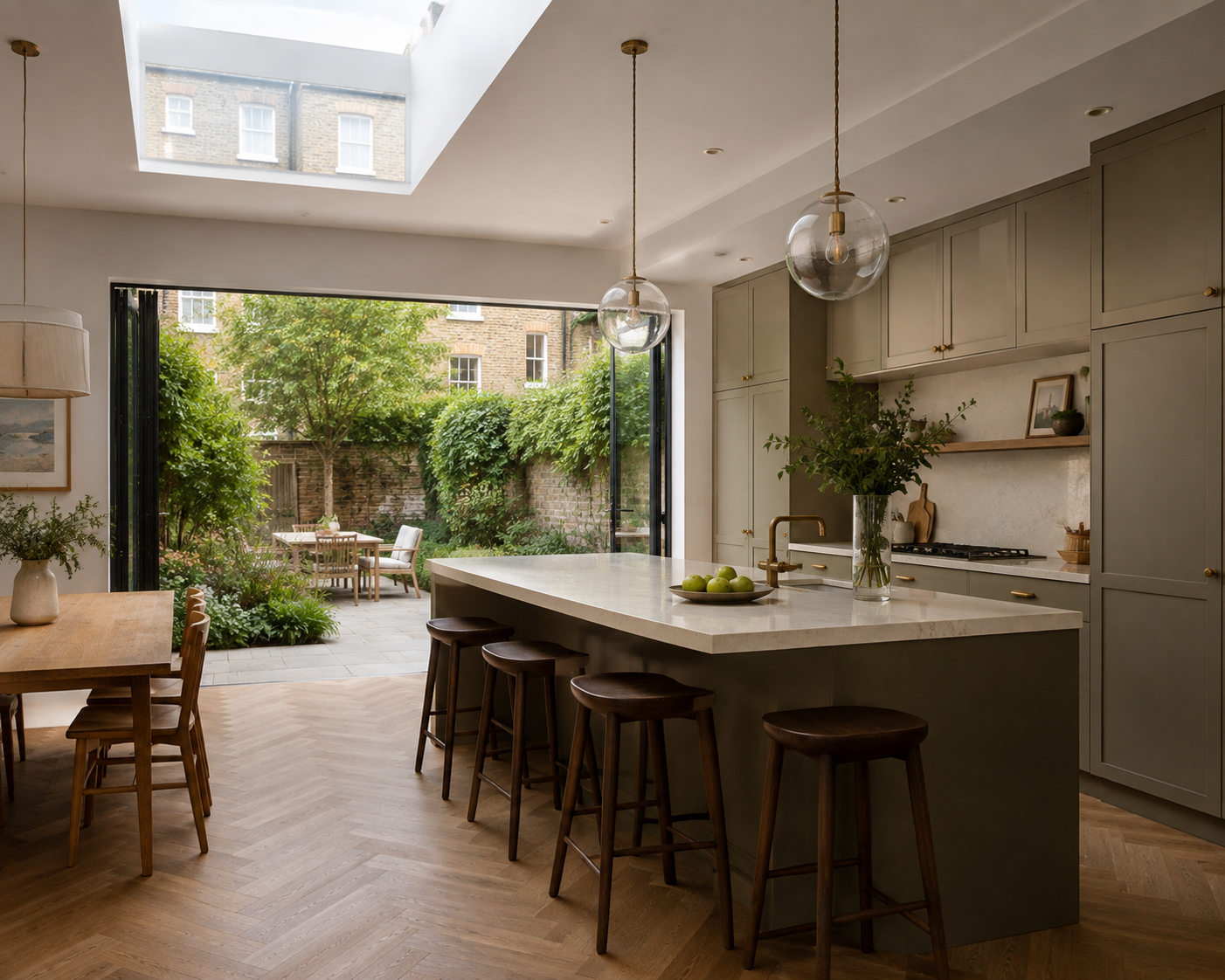
Ask a builder in Chelsea about kitchen extensions and the side return comes up within the first minute — infilling that dead alley space is the obvious move on a tightly packed Victorian terrace. Ask the same question about a property near Hamilton Terrace or Clifton Hill, and the answer changes, because St John's Wood isn't built the same way. Here's what actually works, and why.
Why Side Returns Don't Work the Same Way Here
St John's Wood is defined by wide, tree-lined streets and low-density villa properties, typically detached or semi-detached with genuine gaps between them — a townscape character that Westminster and the St John's Wood Society (consulted on every planning application in the area) actively protect. Those gaps aren't leftover space waiting to be built into; they're a deliberate part of what makes the conservation area what it is, which is exactly why side and roof extensions sit outside permitted development here, unlike in a standard London terrace.
This catches out homeowners who've seen a side return work brilliantly for a friend in Fulham or Chelsea and assume the same logic applies. In St John's Wood, it usually doesn't — infill between villas is heavily scrutinised precisely because the spacing itself is the protected feature, not just the buildings either side of it.
What Actually Works: The Rear Extension
A single-storey rear extension is the more realistic route for most St John's Wood kitchens, and can occasionally qualify as permitted development within tight limits on an unlisted property outside the tightest heritage controls — though given how much of NW8 sits inside the conservation area, a full planning application is the outcome for the large majority of projects. Extending back into the garden rather than sideways respects the villa spacing that Westminster is protecting, while still delivering the larger kitchen-diner most homeowners are actually after.
The Estate Consent Layer
A significant portion of St John's Wood sits within the Eyre Estate or John Lyon's Charity, both of which require estate approval in addition to Westminster planning permission — each publishes its own guidance, including specific policy on basement development and design quality. As with Cadogan Estate consent in Chelsea, this is a separate process that needs running alongside the council application, not after it, and it's one of the most common reasons a St John's Wood project stalls despite planning permission being granted.
What It Actually Costs
Extension typeTypical 2026 cost (all-in)
Single-storey rear extension
£90,000 – £220,000
Rear extension with basement link
£180,000 – £420,000
A householder planning application to Westminster costs £548 from April 2026, with a statutory decision target of 8 weeks — though conservation area applications in St John's Wood, given the Society's involvement in reviewing every application, often take longer in practice.
Frequently Asked Questions
Can I do a side return extension in St John's Wood? Rarely, and not as permitted development. Side and roof extensions fall outside permitted development across the conservation area, and infill between villas is heavily scrutinised since the spacing itself is a protected part of the streetscape.
Do flats in St John's Wood have any permitted development rights? No. Flats have no permitted development rights at all, meaning any extension or significant alteration requires a full planning application regardless of scale.
Is Eyre Estate or John Lyon's Charity consent the same as planning permission? No, it's separate. Where a property sits on Eyre Estate or John Lyon's Charity land, estate consent is required in addition to Westminster's planning permission, and both processes should run in parallel.
Get a Straight Answer on Your St John's Wood Kitchen
Dominant Construction has delivered kitchen extensions and renovations across St John's Wood and the rest of Prime Central London for over 15 years — FMB-registered, working to JCT contracts, with direct experience of both Westminster's planning process and estate consent requirements.
Call 020 7118 6155 for a consultation, get in touch online, or see recent projects at dominantconstruction.co.uk.