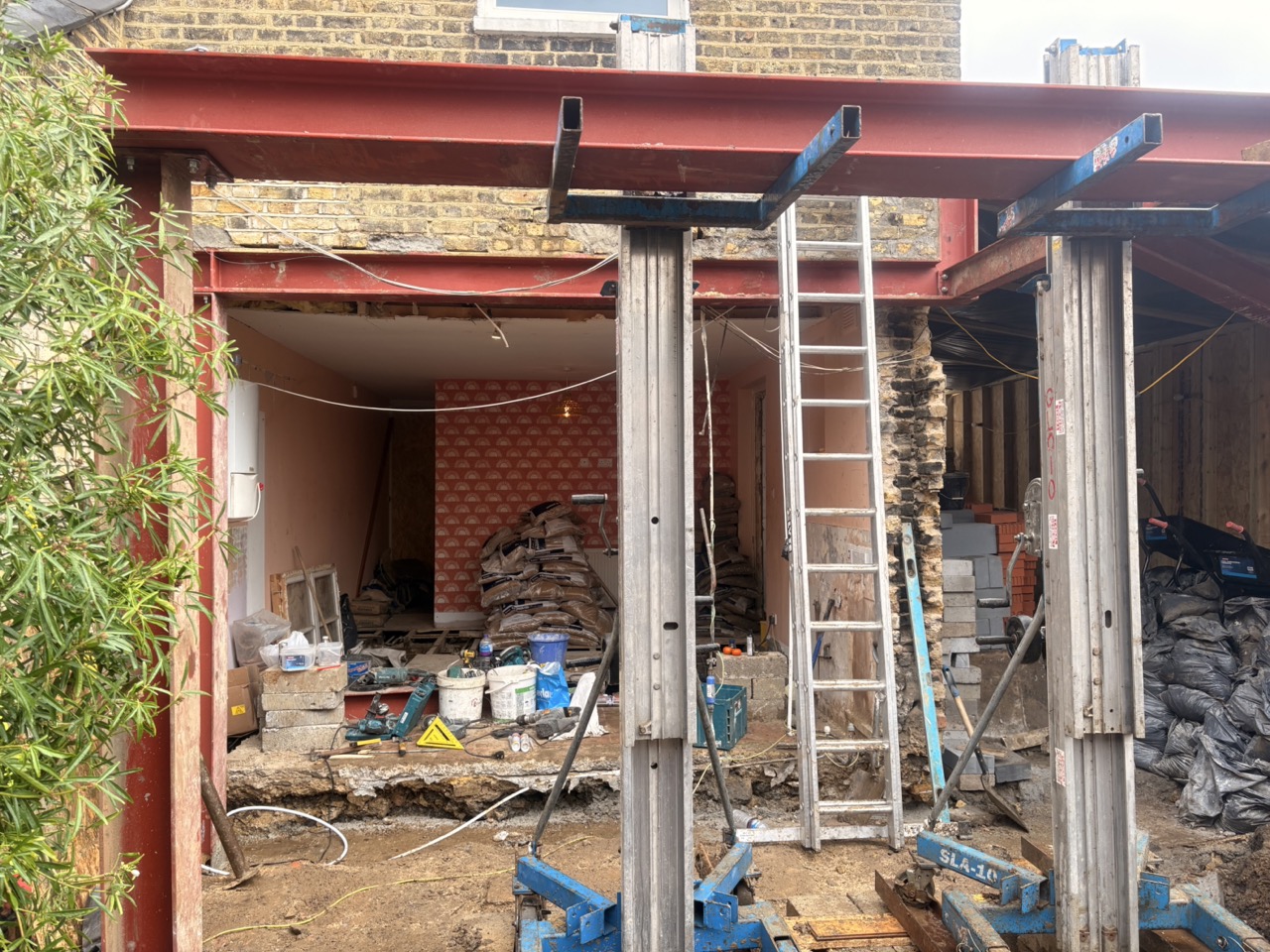
QUICK ANSWER: You need to serve a party wall notice if your project involves work on a shared wall (such as inserting steel beams for a loft, or removing a chimney breast), building a new wall on the boundary (a side return extension), or excavating within three to six metres of a neighbour's foundations (extension footings or a basement). On a Wimbledon terrace or semi, at least one of these usually applies. Notice periods run one to two months, and a single agreed surveyor typically costs £900–£1,500.
Here's the thing about party wall agreements: they derail more Wimbledon projects than planning permission ever does, and almost always for the same reason — the homeowner found out about them too late. Planning gets all the attention, so people plan for it. The party wall process quietly sits in the background until the week work is meant to start, when a letter from a neighbour's surveyor lands and the whole schedule slips by a month. It doesn't have to go that way. Here's what actually triggers it, and when to deal with it.
What Actually Triggers a Party Wall Notice
The Party Wall etc. Act 1996 is the law here, and three common situations bring it into play:
Work on an existing shared wall — inserting steel beams for a loft conversion, removing a chimney breast, or cutting into the wall you share with next door. This is the most common trigger on a Wimbledon terrace.
Building a new wall on the boundary — a side return extension that fills in the alley alongside the kitchen creates a wall right on the property line, which brings the Act into play.
Excavating near a neighbour's foundations — digging within three to six metres of next door's foundations, which covers most extension footings and essentially every basement.
If your project involves any of these — and on a terraced or semi-detached Wimbledon house, at least one usually does — you're required to serve formal notice on the affected neighbours before work starts.
The Notice Periods (and Why Timing Is Everything)
The notice period depends on the type of work, and this is exactly where projects lose time:
Type of work
Notice period
New wall on the boundary
1 month
Work on an existing party structure
2 months
Excavation near foundations
1 month
Your neighbour then has 14 days to respond. If they consent in writing, the matter concludes immediately. If they dissent — or simply don't reply, which counts the same way — a dispute is "deemed to have arisen," and a party wall surveyor is appointed to produce a formal award before work can begin.
The practical consequence: a two-month notice period on party structure work, plus the time to resolve a dissent, means this process needs starting two to three months before you want construction to begin. Leave it until the build is booked, and the build waits.
What It Costs
Where a neighbour consents, the cost is minimal — just the notice preparation. Where an award is needed, a single agreed surveyor acting for both parties typically costs £900–£1,500, with a schedule of condition (a pre-work record of the neighbour's property) adding £300–£600. If each side appoints their own surveyor, costs roughly double. One point that surprises homeowners: the building owner — you — pays the reasonable surveyor fees, including the neighbour's surveyor where one is appointed.
The Part Most People Get Wrong
A party wall agreement is not planning permission, and having one doesn't mean you have the other — they're entirely separate processes that run in parallel. The most common and avoidable mistake we see in Wimbledon is treating the party wall step as something to sort out "once planning's through," rather than starting it alongside the planning application. Run them together, and the party wall process costs you nothing in time. Run them in sequence, and you've added a month or two to the project for no reason.
Frequently Asked Questions
Do I always need a party wall agreement for an extension in Wimbledon? Not always, but usually — if the work touches a shared wall, creates a wall on the boundary, or excavates near a neighbour's foundations, notice is required. A straightforward rear extension set well away from the boundary may not trigger it, but most terraced and semi-detached projects do.
What happens if my neighbour ignores the notice? Non-response counts as dissent, and a dispute is deemed to have arisen. The process doesn't halt — it moves to surveyor appointment and a formal award, so an uncooperative neighbour can't block the project, though it does add time and cost.
Who pays for the party wall surveyor? Generally the building owner carrying out the work, including the neighbour's surveyor's reasonable fees where a separate one is appointed — since the work is being done for your benefit, not theirs.
Planning Work on a Wimbledon Party Wall?
Dominant Construction has managed extensions, loft conversions, and the party wall process that comes with them across Wimbledon and South West London for over 15 years — FMB-registered, working to JCT contracts, and sorting the party wall step in parallel with planning so it never becomes the thing that delays your build.
Call 020 7118 6155 for a consultation, get in touch online, or see recent projects at dominantconstruction.co.uk.