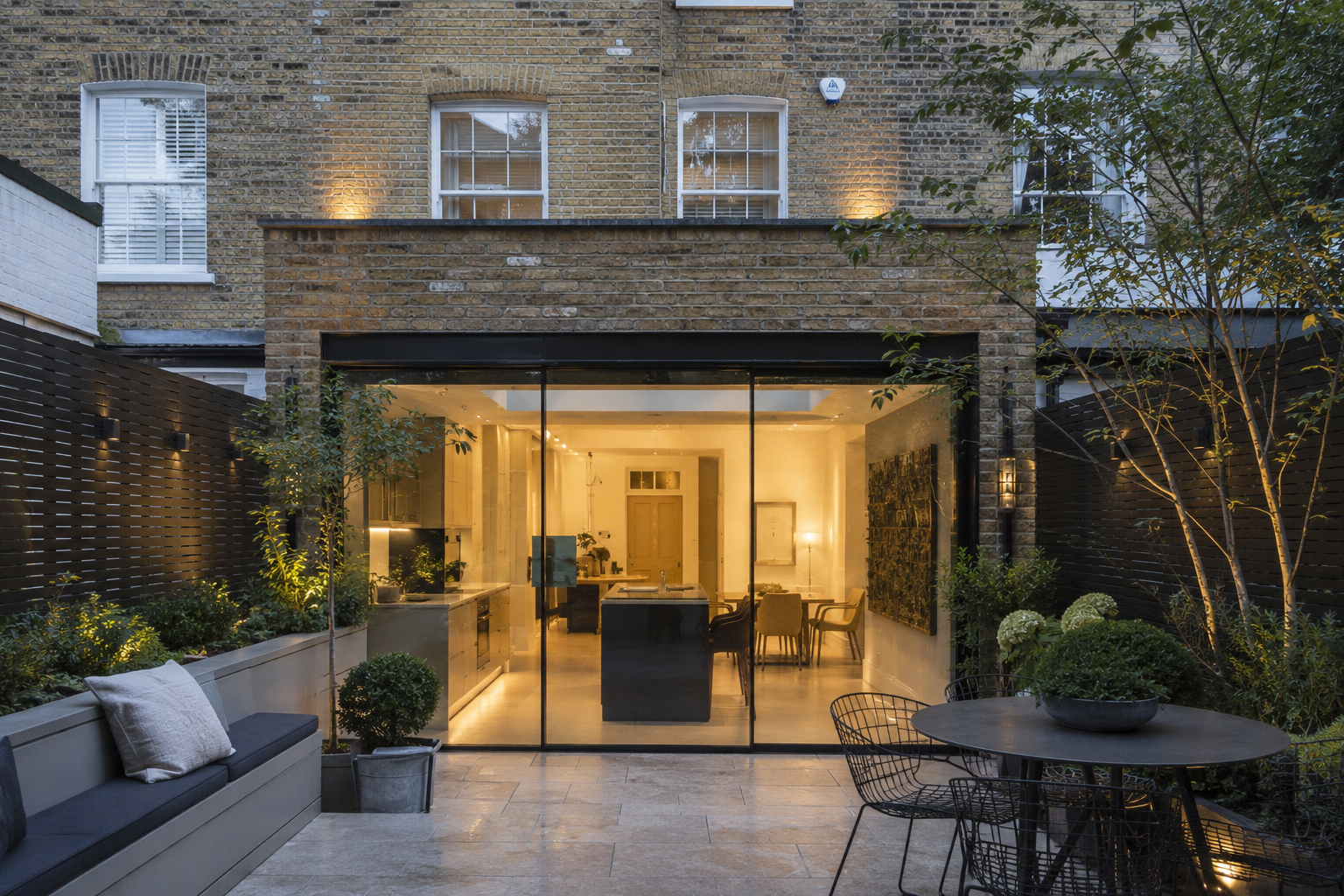
Why Belgravia and Chelsea Homeowners Are Extending Instead of Moving
QUICK ANSWER: A rear or side return house extension in Belgravia or Chelsea typically costs £100,000–£350,000 depending on size and specification. With stamp duty and agent fees on a Prime Central London property routinely running into six figures, extending the house you already own is now the more financially sensible move for most homeowners in both areas — provided the design works with the conservation area rules that cover almost all of SW1 and SW3.
Nobody in Belgravia moves house for fun. Between stamp duty, the agent's cut, and the sheer administrative misery of it all, relocating from a stucco terrace on Eaton Place to a near-identical one two streets over can easily cost £150,000 before you've bought a single box of packing tape. So increasingly, people don't move. They dig sideways instead.
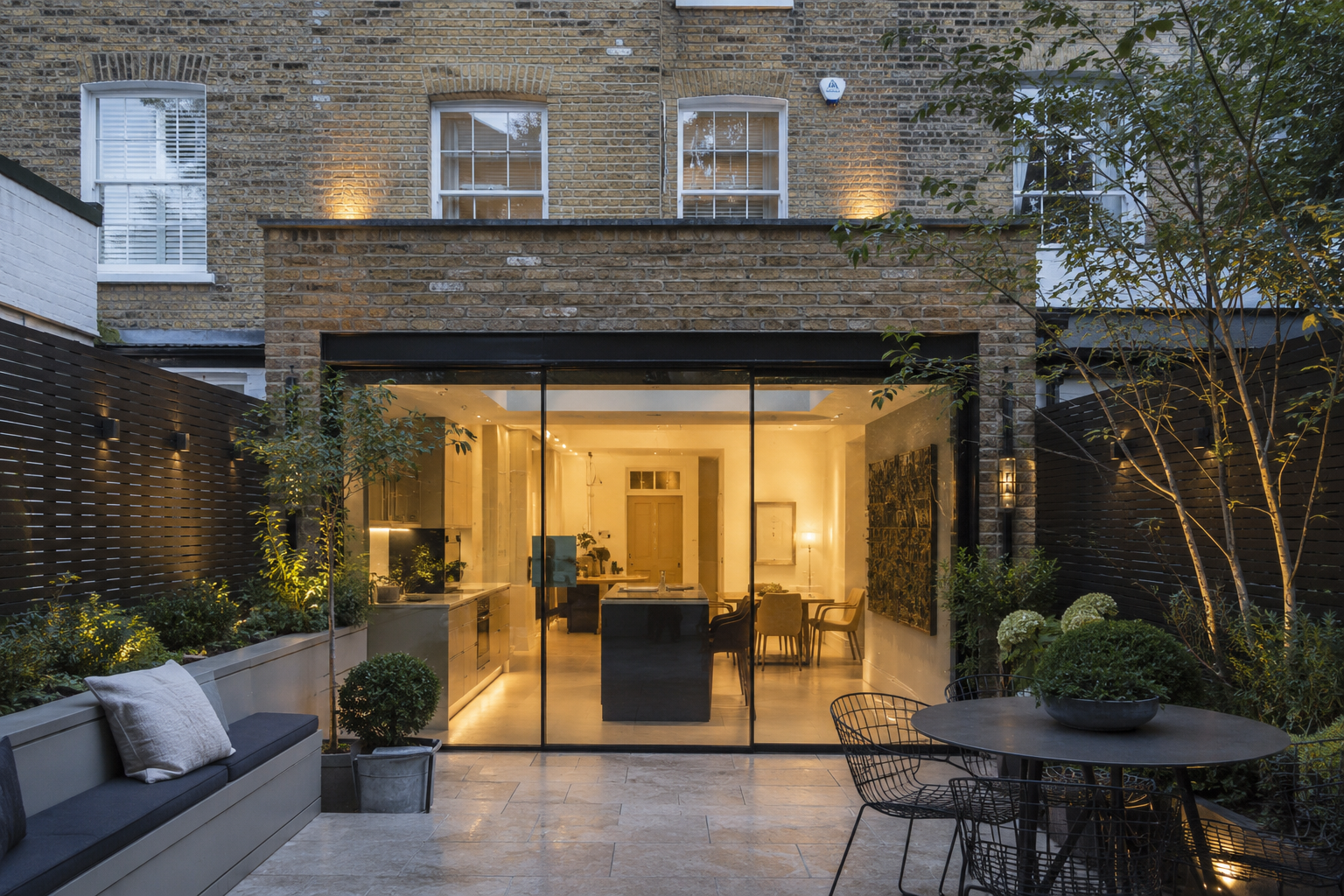
Belgravia: Extending Without Anyone Noticing
Belgravia's stucco-fronted terraces present a specific design problem: the street-facing side is essentially untouchable. Grade II listing, conservation area status, and — on much of the Grosvenor Estate — a freeholder who takes the phrase "architectural integrity" very seriously indeed. So Belgravia extensions happen almost entirely at the back, out of public view, which is exactly where a good architect wants them anyway.
A rear extension here typically adds a proper kitchen-diner where a poky galley kitchen used to sit, often paired with a side return infill on the ground floor to squeeze in another few metres of width. The trick — and it really is a trick, not a formality — is matching the extension's brickwork, window proportions, and roofline so precisely that a planning officer walking past sees an extension that looks like it's always been there. Get that wrong, and you're refusing a scheme, not approving one.
Costs for a rear extension in Belgravia run £120,000 to £300,000; a full wrap-around (rear plus side return combined) £180,000 to £400,000. Not cheap. Considerably cheaper than moving.
Crossing Into Chelsea: Same Logic, Different Streets
Walk south past Sloane Square and the postcode changes to SW3, the council changes to a different authority entirely, but the underlying homeowner logic stays identical: extend the house, don't sell it. Chelsea's Victorian terraces off the King's Road tend to have narrower footprints than Belgravia's grander stucco properties, which makes the side return extension — infilling that awkward alley strip beside the kitchen — an especially popular move here. It's the difference between a kitchen you can swing a cat in and one where the cat files a complaint.
Chelsea also throws in an extra planning wrinkle Belgravia doesn't have in quite the same form: the Cadogan Estate, which covers a meaningful chunk of the borough and applies its own freeholder consent on top of the council's. Miss that step and you can have full planning permission and still not be allowed to start work — a genuinely common and entirely avoidable mistake.
Rear extensions in Chelsea run £100,000 to £250,000, side returns £60,000 to £120,000, wrap-arounds £150,000 to £350,000 — figures that track closely with Belgravia, which makes sense given how similar the underlying maths is: extend for a fraction of what moving would cost, in a market where moving is unusually expensive on both sides of Sloane Street.
What Actually Determines the Cost
Whichever side of the boundary you're on, the same factors move the number:
- Size and structural complexity of the extension
- Glazing specification — bifold and Crittall-style doors cost meaningfully more than a standard window, and are worth it
- Whether full planning permission is needed (almost always, in both areas)
- Estate freeholder consent, where applicable
- Site access — narrow terraced streets in either postcode add labour and logistics cost versus outer London
Frequently Asked Questions
Is it cheaper to extend or move house in Belgravia or Chelsea? For most homeowners, extending. Stamp duty, agent fees, and moving costs on a Prime Central London property routinely exceed £150,000, often more than a full rear extension would cost — without the disruption of finding, buying, and moving into a new house.
Do I need planning permission for a rear extension? Almost always, yes, in both Belgravia and Chelsea. The permitted development rights that apply in less protected parts of London are largely removed by conservation area status here, so a full planning application is the standard route, not the exception.
How long does a house extension take, start to finish? Typically 4–7 months for construction once planning is secured, with the planning process itself adding a further 8–14 weeks beforehand.
Thinking About Extending?
Dominant Construction has delivered house extensions across Belgravia, Chelsea, and the rest of Prime Central London for over 15 years — FMB-registered, working to JCT contracts, managing planning liaison and construction under one roof.
Call 020 7118 6155 for a free consultation, visit us at 185 Fulham Palace Road, W6 8QX, or see recent projects at dominantconstruction.co.uk.